






Alpha Gal Syndrome – Aricular Therapy Treatment Day 2)

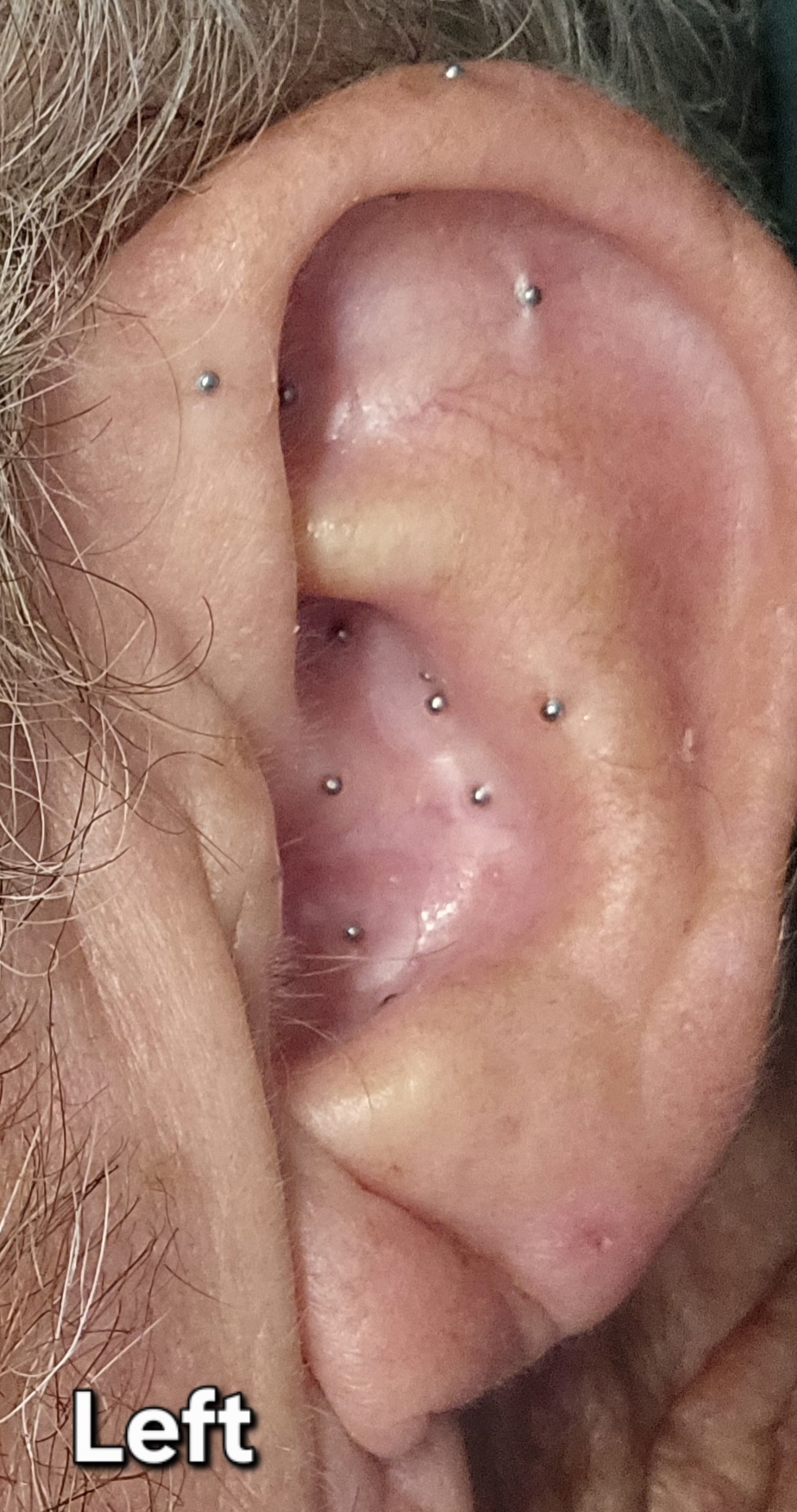
Day 2 of the ear seeds, and the day behaved exactly the way she said it would.
Read Previous Article on Day One Treattment
I did not feel a turn. No clearing. No new appetite for the foods I have kept off the plate since the Lone Star tick rewrote the rules. The tiny seeds stayed where she placed them, pressing the points on the ear and never breaking the skin. Pressure only. No needles. She had told me not to expect anything yet, and not to test the allergy while the body was still in the middle of the work. So I stayed with the plan: no red meat, no dairy.
Then, right after the treatment, I ate a cinnamon roll.
It tasted like an ordinary morning. A few hours later, on the same clock I have come to know too well, the belly tightened. Pain first. Then a light itch. Then the bloating that fills the middle and will not be argued with. We went back through the day meal by meal. Nothing else fit. The roll had dairy in it. The reaction arrived about four hours later, right on schedule.
That was the lesson of the second day. The seeds are doing what seeds do at this stage, which is mostly waiting. The allergy is still the allergy. Avoidance is still the work.
Next Tuesday the seeds come off. She called that a rest day, a pause so the body can settle after six days of steady pressure at those points. Wednesday the next set goes on. Four rounds in all, she said, before we talk about the old foods as if they might be finished with me.
I am not counting on a miracle by Wednesday. I am counting on the sequence: pressure, rest, pressure again, and no more cinnamon rolls until the calendar says otherwise. The paper that first put auricular treatment for alpha-gal on the map used needles and reported remission in most of the patients they followed. My version is quieter than that. Seeds. Pressure. Six days, then a rest, then another set. Day 2 did not feel like a cure. It felt like the allergy still answering when I asked it the wrong question.
This is the research paper that got me started in Aricular Therapy
Background on Alpha Gal Syndrome
Alpha-gal syndrome (AGS) is triggered when certain tick species, most commonly the lone star tick in the United States, bite a person and introduce a sugar molecule called galactose-alpha-1,3-galactose into the wound. The immune system recognizes this sugar as foreign and starts producing IgE antibodies against it. Those antibodies then react to the same sugar when it shows up in mammalian meat, dairy, gelatin, and even some medications derived from animal products.1 The reaction is delayed, typically appearing three to six hours after eating, which is part of why AGS went unrecognized for so long and remains underdiagnosed.
This mechanism matters for the remission question because the allergy is not hardwired into your genetics. It is maintained by a specific antibody response that was kicked off by an external event. Remove the trigger, and the antibody levels have nowhere to go but down.
The strongest evidence that AGS can fade comes from tracking antibody levels over time in people who manage to stay tick-free. In a study following AGS patients, those who reported no new tick bites saw significant drops in both their alpha-gal-specific IgE and their total IgE levels. Patients who continued getting bitten did not see the same decline.2 The implication is straightforward: tick avoidance is the single most important factor determining whether someone’s AGS improves.
How quickly the antibodies drop varies from person to person. Some people see meaningful decreases within a year or two; others remain sensitized for much longer. There is no reliable way to predict who will improve quickly and who will not. Allergists often recheck alpha-gal IgE levels periodically, and a sustained downward trend is what clinicians look for before even considering whether reintroduction of mammalian products might be safe.
It is worth noting that a drop in IgE levels does not automatically mean a person is in the clear. Someone whose antibodies have decreased might still react to a large serving of fatty red meat, because fat appears to affect how the alpha-gal sugar is absorbed and presented to the immune system. The threshold for reaction shifts, but it does not necessarily vanish all at once.