




Coming home to Paw Paw

Coming Home to Paw Paw
A family visit, a festival, and the names that keep coming back
Some towns you pass through. Paw Paw is the kind you carry.
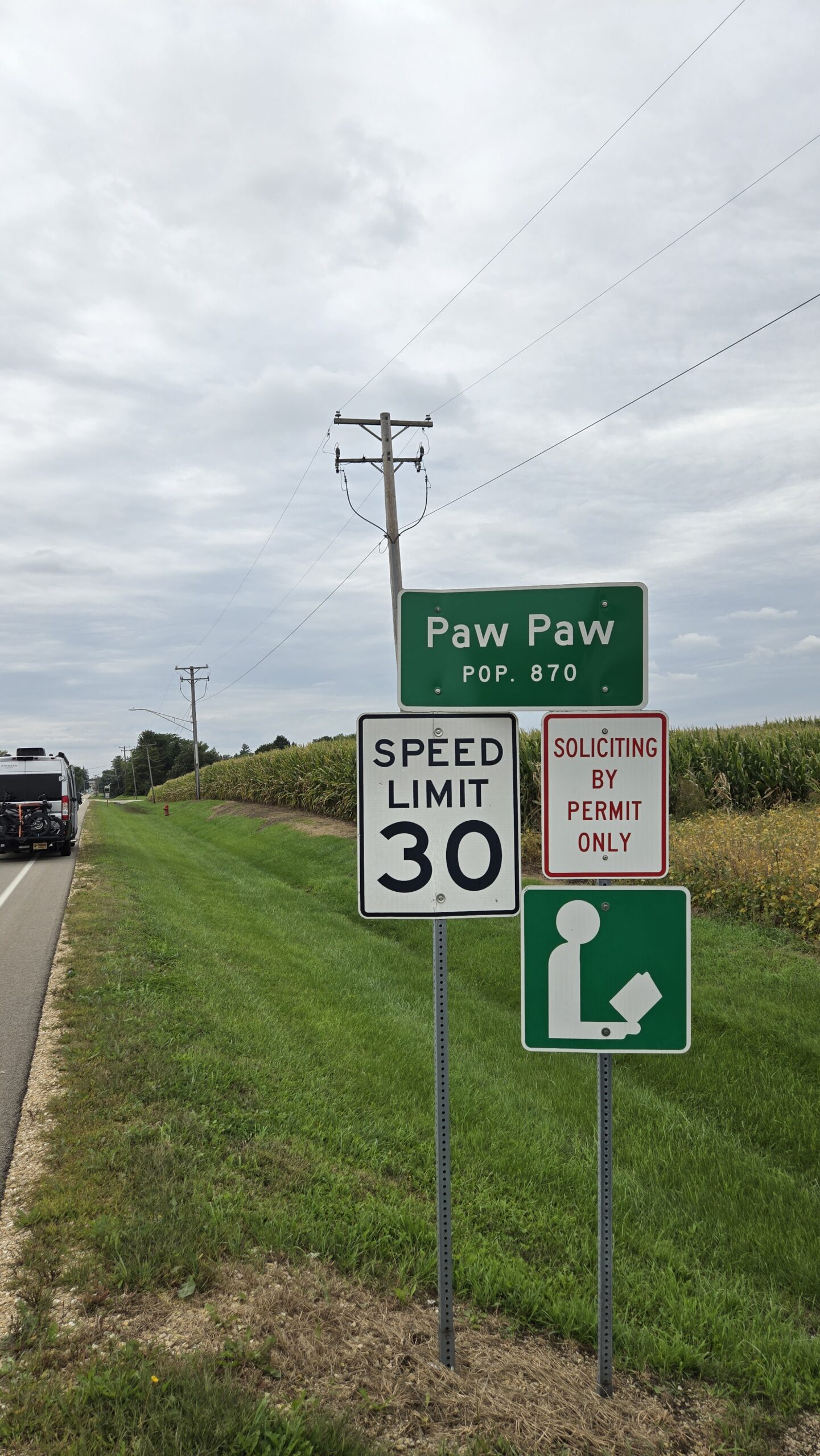
This past weekend we stood in Wyoming Cemetery under Illinois sky and then walked into the annual Pawpaw Festival like we had been expected.
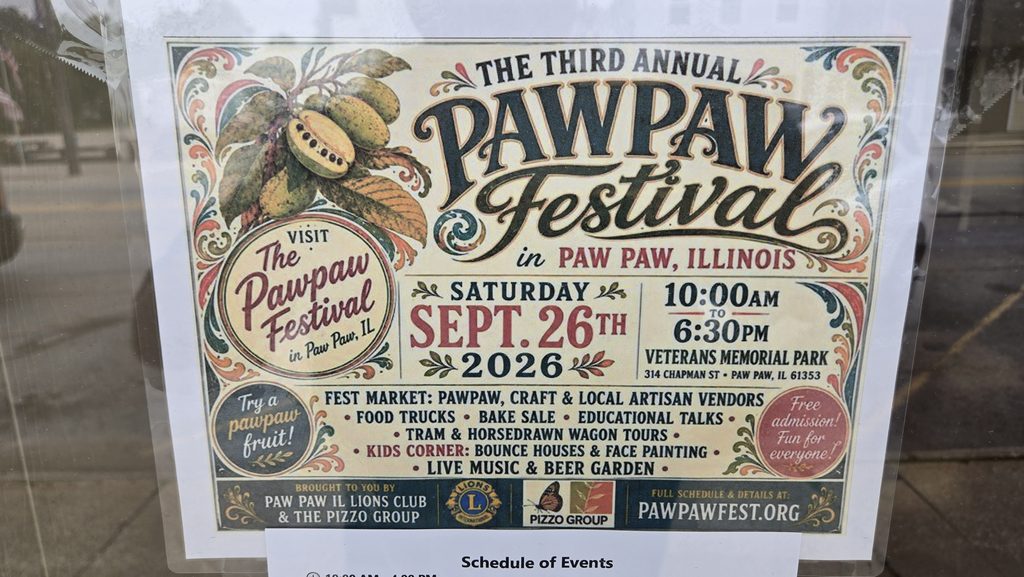
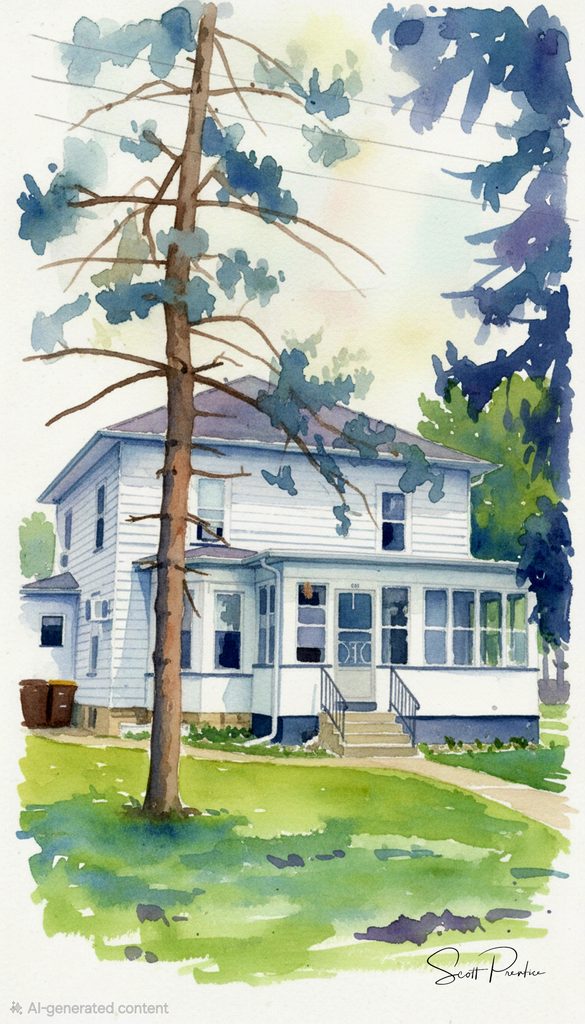
We were. The Prentices who still live in the house John Newton Prentice built in 1890 opened the door, and for a little while the 1800s and 2026 sat at the same table.
We met Mitch and his wife Hannah, whose pottery at the Muddy Otter is the kind of work you want to hold with both hands. We came home with two festival mugs we will not treat as ordinary cups.
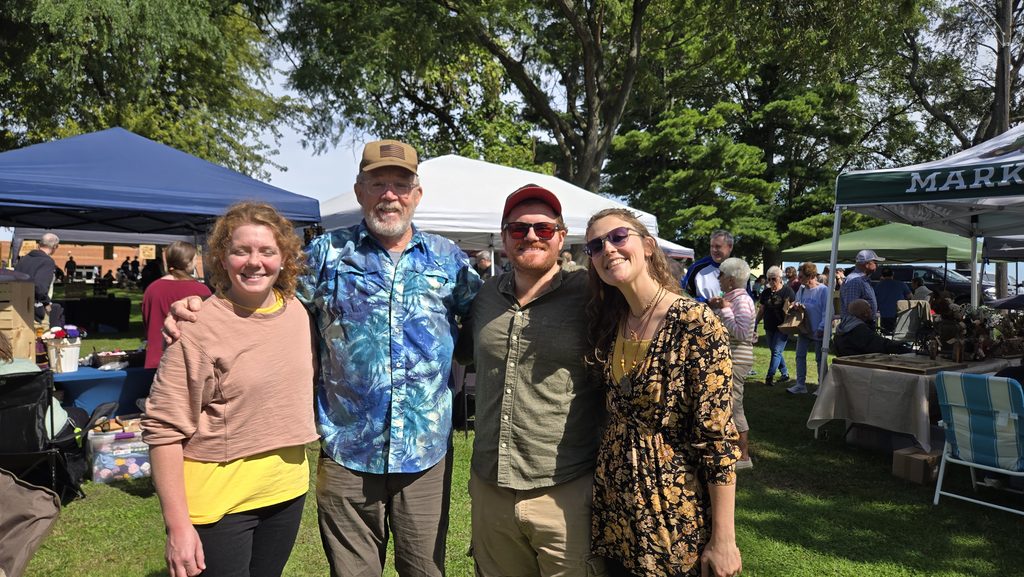
We met beautiful Emily Prentice, the oldest of John and Stephanie.
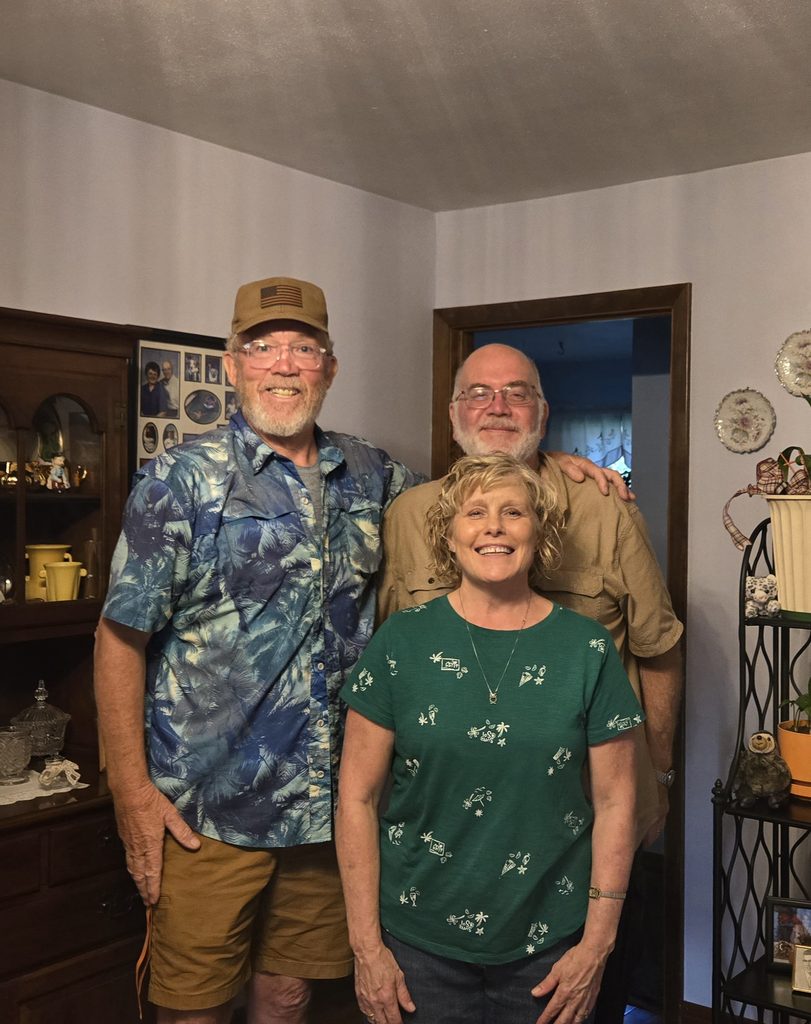
We met John N. Prentice and Stephanie also — Mitch and Hannah making their lives a home in the original house, still carrying the name on the same ground. That is not a museum. That is a living line.
The great privilege was quieter. We went to the resting places of our beloved cousins Jan and Amber Prentice.
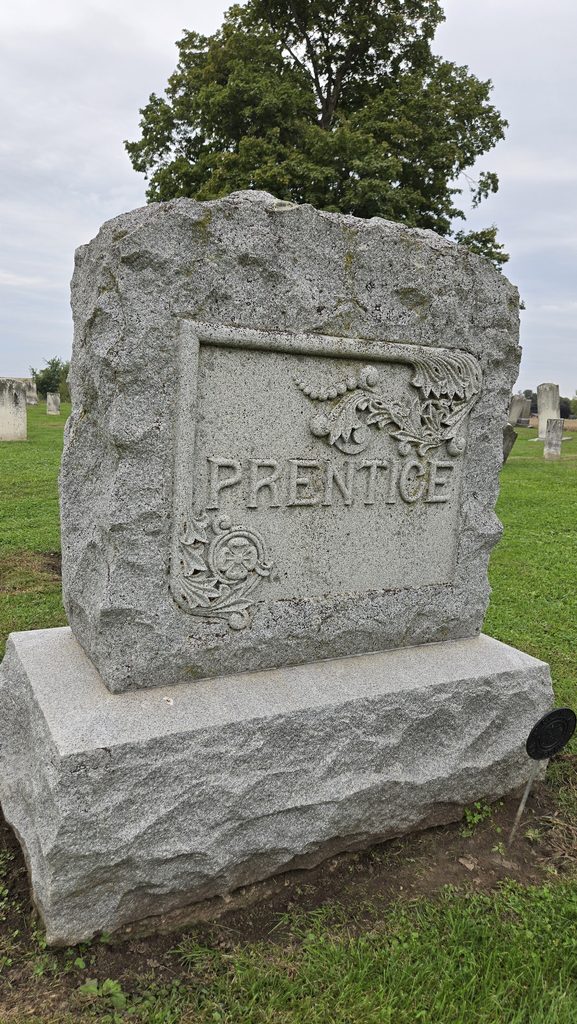
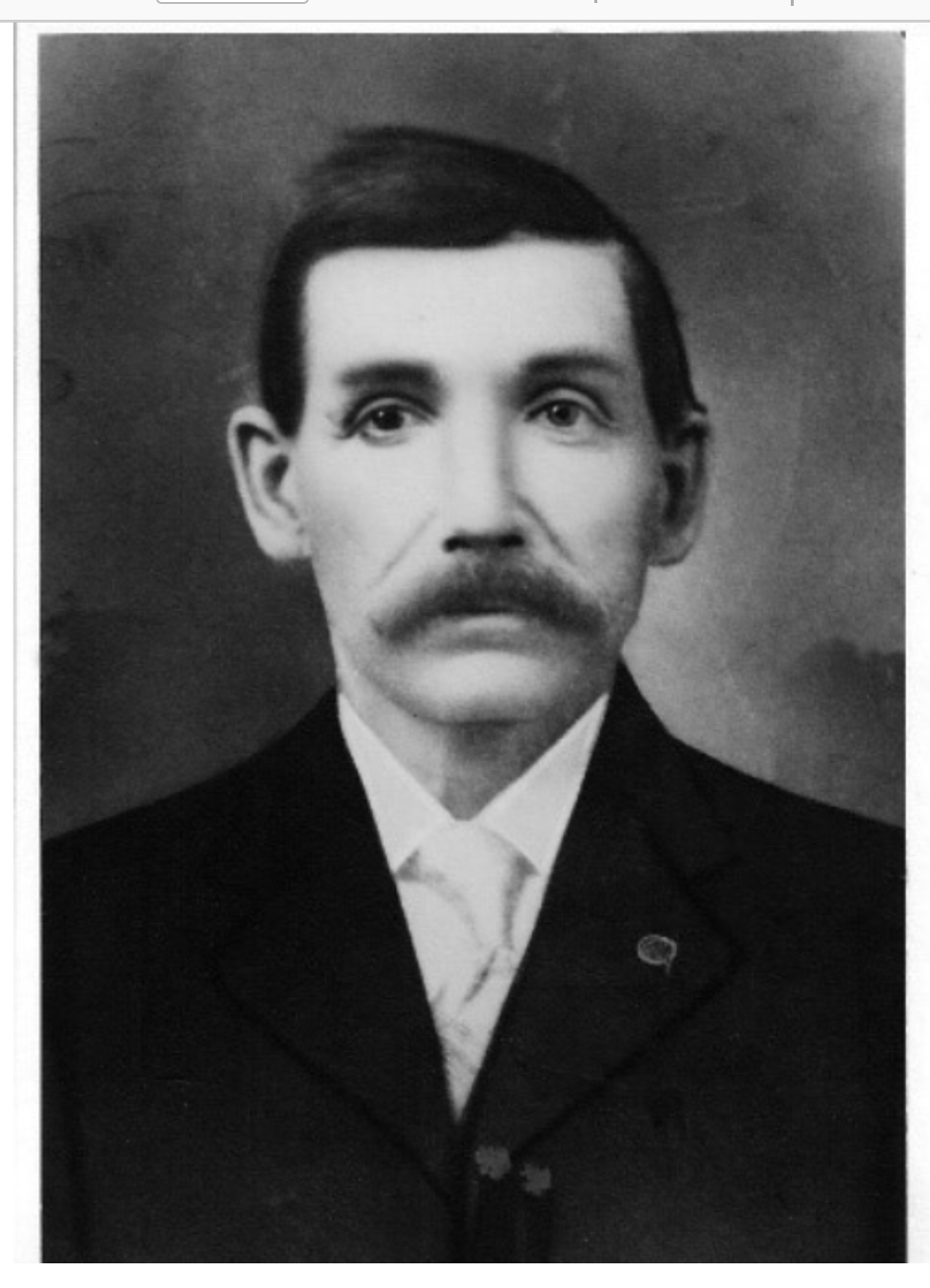
We stood at the beautiful stones of John Newton Prentice and Mary Jennette Olsen Prentice. You can read a diary in a book. You can stand where the man who wrote it came home in 1865, built a house in 1890, and was laid to rest in 1912. Those are different kinds of knowing.
And yes — footnote for anyone planning the next trip — the chicken at the Beaver downtown was exactly as good as a small-town Saturday is supposed to be.
The soldier who came home
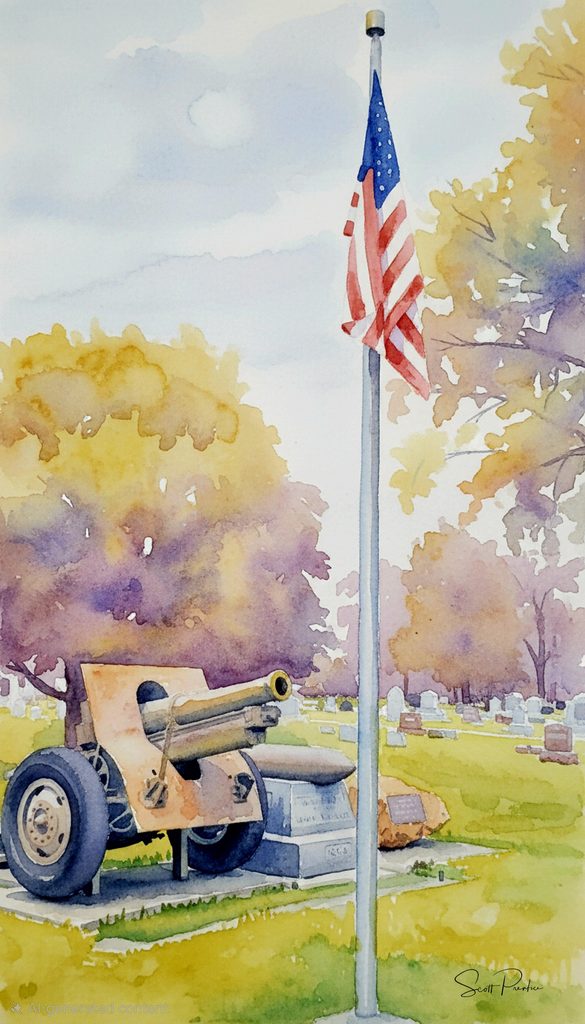
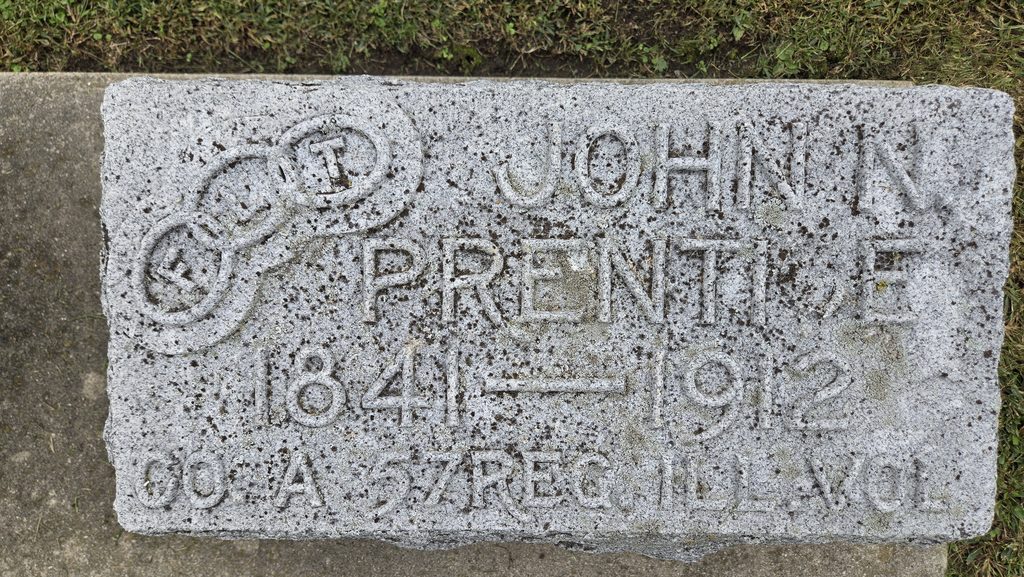
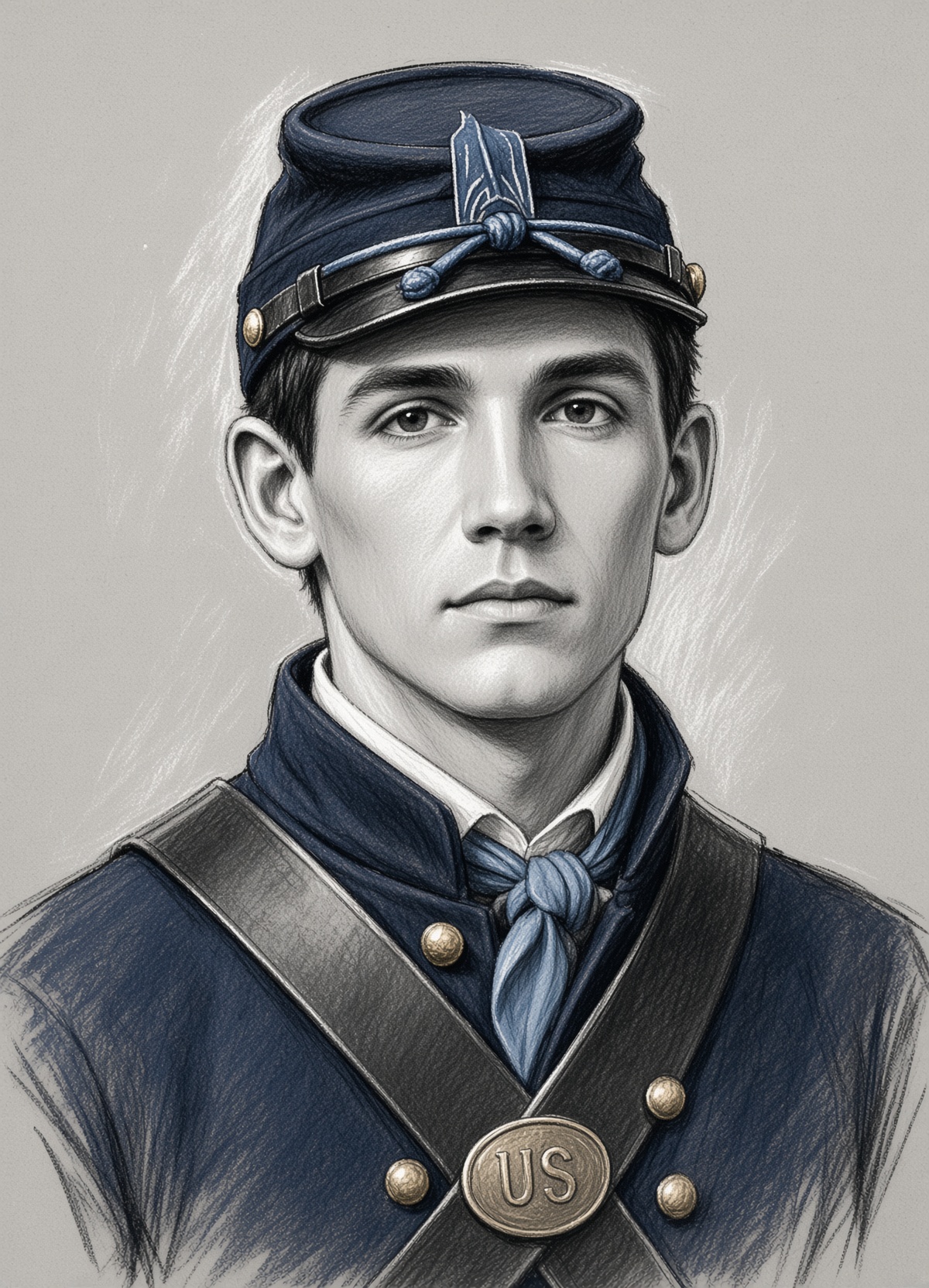
John Newton Prentice was born May 8, 1842. On October 31, 1861, a farm boy from the Mendota and Paw Paw country enlisted in Company A of the 57th Illinois Volunteer Infantry. He served the whole war in the Western Theater — Fort Donelson through Sherman’s march — and he wrote almost every day. Cousin Doyl Fritz of Sheridan, WY spent a year pulling those faded pages into clear English so the rest of us could hear him. On July 13, 1865, John took the afternoon train and was home by nine. “A joyful meeting to us all,” he wrote. The next day: “Thus I am transformed to a citizen again.”
He married Mary.
They raised their children in Paw Paw. In 1890 he built the house that Mitch’s family still keeps. He died June 6, 1912, and rests with Mary in Wyoming Cemetery.
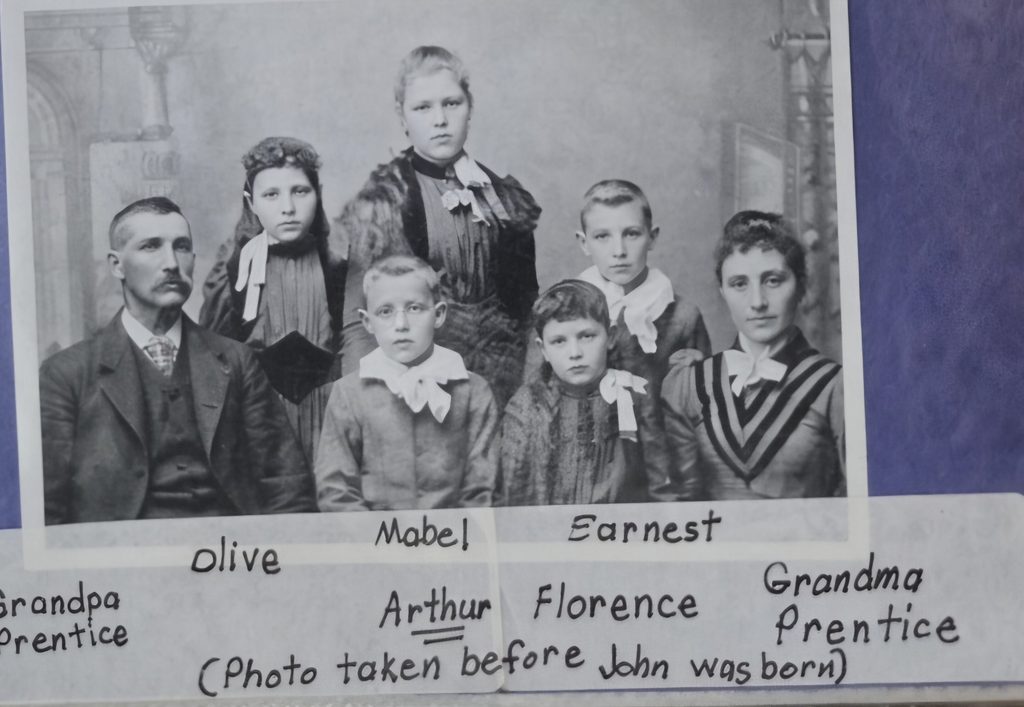
The children we have been tracing from that household include Olive Atherton, Florence, Mabel Grunderman, Earnest, Arthur Clarence Prentice — my grandfather — and a later son, John. An old family photograph was taken before that last John was born. The album knew he was coming.
Arthur’s line runs through my father, Robert Leroy Prentice, and on to us. Other branches stayed closer to the grove. That is why walking into the 1890 house this weekend felt less like a tour and more like knocking on a door the family never quite locked.
What the records have been giving back
This summer and fall we have been walking the siblings one by one, the same way you walk rows in a cemetery — slowly, name by name.
Mabel shows up in Earnest’s 1933 obituary as Mrs. Mabel Grunderman. Social Security records name Fred L. Grunderman as father of twins born June 11, 1916, in Paw Paw: Florence M. Dempsey and Phoebe Alice Kaiser. That first twin’s name is not an accident. Florence, Mabel’s sister, must have been loved in a particular way. When a sibling names a child after a sister, it is a small public vow: we will not let her fade. Every time we find Florence again — on a census line, in a photograph, in a baby’s name a generation later — we are answering that vow.
Olive Atherton and Florence have their own Paw Paw and Lee County footprints. The sisters did not all stay in one house, but they stayed in one story.
Then there is the question that keeps tapping on the Massachusetts door.
In the 1881 History of Lee County, an Asahel Prentice, born 1833 in Chester, Massachusetts, is named as the son of Ephraim Prentice and Susan Bisbee. He came to Wyoming Township in the fall of 1856. Susan, the sketch says, remained in Massachusetts. John Newton was born nine years after Asahel. Same Massachusetts Prentice cluster. Same tiny Illinois township. The old colonial chart already places Ephraim and Susan Bisbee on the line that leads to John Newton. Asahel looks, in every way that matters, like an older brother who got here first.
We do not yet have the one page that puts both boys in the same household — an 1850 Chester-area census, a Massachusetts birth for John in 1842 naming Ephraim and Susan, or John Newton’s 1912 Illinois death record naming his parents. Until that paper turns up, we tell it honestly: they look like brothers. The places agree. The dates agree. The family chart already believed it. The last inch is still in a ledger somewhere east of the Hudson.
That is how this work goes. You do not invent a family. You wait for them to say their own names.
Love sent back
Paw Paw did not have to treat a wandering cousin like kin. It did anyway.
Thank you, John and Stephanie, for keeping the house and the welcome. Thank you, Emily. Thank you, Mitch and Hannah — those mugs will outlast a lot of conversations, which is what good pottery is for. Thank you to everyone who still says the name Prentice in the same town where a nineteen-year-old took Lincoln’s call and a forty-eight-year-old raised a roof.
To the community that puts on a festival for a fruit that will not ship and a grove that gave the town its name: you are doing the same work the family is doing. You are refusing to let a local thing become only a footnote.
I have been thinking, standing at those stones, that Illinois might one day set aside a modest remembrance for John Newton Prentice — not as a marble general, but as the kind of soldier this country actually ran on: a farm boy who wrote every day, came home, built a house, and left children who are still here. I may even say that out loud to Springfield. A state can honor a famous name. A small town already knows how to honor a neighbor.
Until then, we will keep the ordinary honors. We will drink from Hannah’s cups. We will walk Wyoming Cemetery when we can. We will keep looking for Susan Bisbee’s Massachusetts kitchen and for the census line that puts Asahel and John under one roof. We will say Florence’s name because Mabel already did.
And when anyone asks why a person would drive across the heartland for a festival, a cemetery, and a plate of chicken at the Beaver, the answer is simple.
The house is still standing.
The name is still spoken.
The graves are tended.
The family is not a chart. It is a door that opened.
That is enough treasure for one weekend. We will cherish it for the rest of the ones we get.